

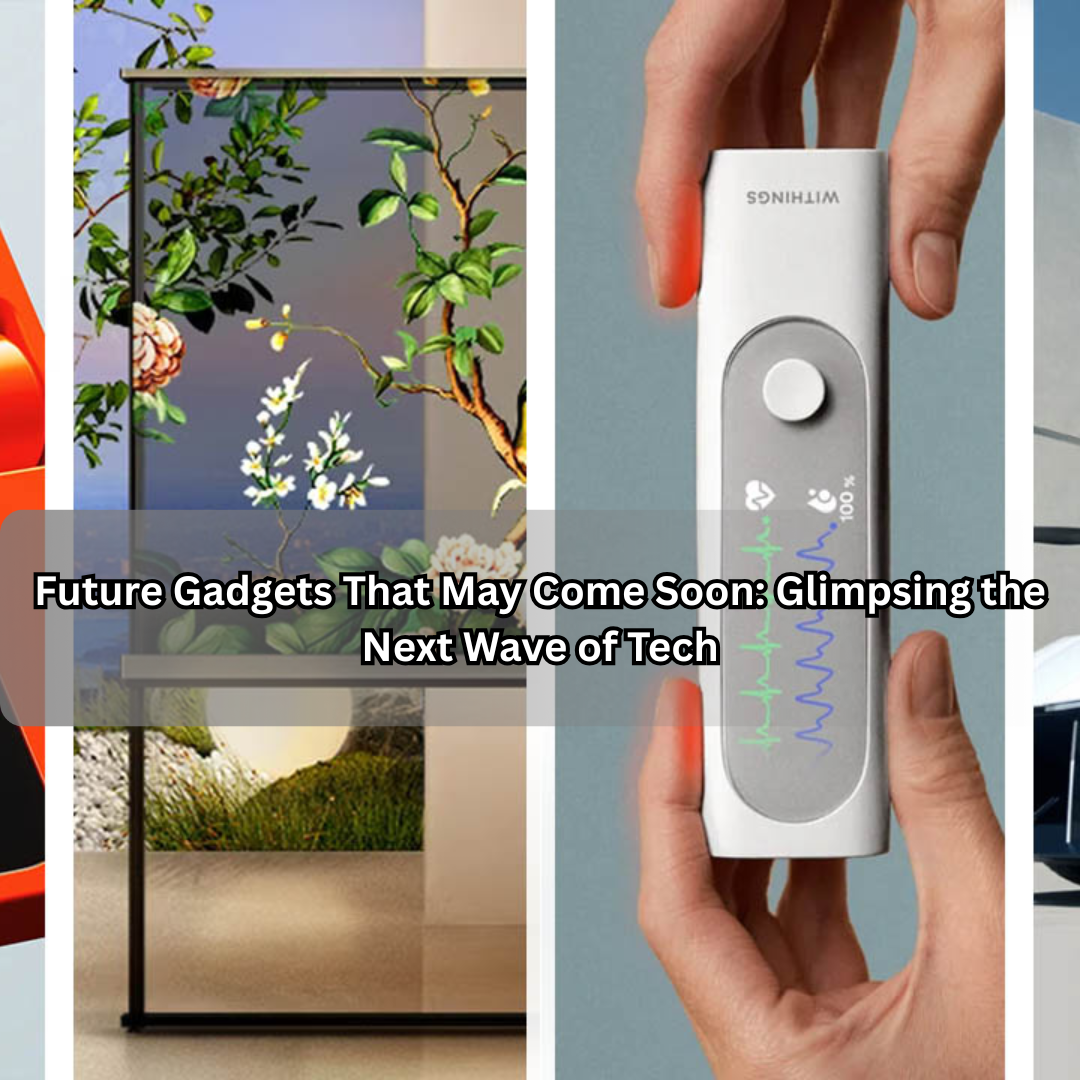
Every decade introduces a wave of technology that changes how humans live, work, and connect. A few years ago, nobody thought that we would carry miniature computers in our pockets capable of controlling homes, tracking health, or making 4K videos. Today, those devices are basic necessities. But innovation never stops—while we are comfortable with smartphones and smartwatches, the next generation of gadgets is already taking shape.
The future of technology won’t just be about speed or power. It will be about intelligence, personalization, and connection. The next wave of gadgets will blend seamlessly into daily life—working quietly behind the scenes, anticipating needs, and delivering convenience with minimal effort.
Let’s take a detailed look at the future gadgets that may come soon, exploring how they’ll shape our routines, simplify our work, and redefine what we call “smart.”
The Evolution of Gadgets: From Tools to Companions
Gadgets started as tools—radios, telephones, calculators—but today, they act more like companions. We rely on them to wake us up, plan our day, guide us to destinations, remind us of meetings, and even monitor our health. The future will take this companionship a step further.
Upcoming gadgets will:
- Learn from behavior and adapt automatically.
- Merge physical and digital realities through augmented layers.
- Operate through voice, touch, and even emotion.
- Function independently using artificial intelligence.
In short, gadgets will stop feeling like devices and start behaving like intelligent partners in everyday life.
1. Smart Glasses and Augmented Reality (AR) Devices
The most talked-about future gadget category is smart glasses—lightweight eyewear that overlays digital information onto the real world.
Imagine walking down a street and seeing restaurant ratings floating beside the buildings, directions appearing on the sidewalk, or your calendar hovering subtly in view. These glasses will do all that without needing to look at a phone screen.
How They’ll Work:
Smart glasses will use miniature projectors and transparent displays that reflect images directly onto the retina. They’ll integrate with AI assistants, smartphones, and even vehicles.
What They’ll Offer:
- Real-time translation when you travel abroad.
- Health tracking through sensors embedded in the frame.
- Navigation, weather, and notifications displayed subtly.
- Hands-free communication and photo capture.
Why They Matter:
They’ll reduce screen addiction. Instead of staring down at phones, people will experience information in a natural, heads-up way.
The challenge will be making them light, affordable, and socially acceptable. But once major companies solve those three, smart glasses could become as common as phones.
2. Foldable and Rollable Screens
The evolution of screens is one of the most exciting areas of gadget innovation. For decades, displays were rigid rectangles. Soon, that limitation will disappear.
Foldable phones have already reached the market, but the next step is rollable and stretchable displays. These will allow devices to expand when needed—turning a pocket-sized phone into a tablet or even a small monitor.
How They’ll Change Things:
- Imagine a laptop that rolls into a tube and fits in a bag.
- TVs that unfold like paper posters.
- Smart bracelets with wrap-around screens that act as phones.
Why It Matters:
Flexible screens will merge portability with immersion. You won’t have to choose between small and large screens—one device can serve both purposes.
Challenges Ahead:
Durability and power management are the biggest hurdles. But once solved, the design of gadgets will change forever.
3. AI-Powered Personal Assistants in Every Device
We already have voice assistants like Siri and Alexa, but the next generation will be vastly smarter.
Instead of just answering questions, these assistants will predict actions, learn behavior, and act independently.
Examples of What’s Coming:
- A phone that automatically silences itself in meetings based on your calendar.
- A smart desk lamp that adjusts brightness according to your mood and posture.
- A personal assistant that reads emails, summarizes them, and drafts replies in your style.
AI will make every gadget around us more personal. It won’t just follow commands—it will understand context.
This level of intelligence means that your watch, car, and home will work together as one ecosystem—anticipating your next move.
4. Smart Rings and Mini Wearables
The future of wearables is moving from wrists to fingers. Smart rings are compact, fashionable devices capable of measuring heart rate, temperature, sleep, and even blood oxygen levels—all while looking like jewelry.
Why They’ll Dominate:
- Smaller and lighter than smartwatches.
- Easier to wear 24/7, including during sleep.
- Capable of payment, authentication, and fitness tracking.
Beyond Rings:
Soon we’ll see ear-wearables, necklace sensors, and smart clothing patches that monitor hydration, stress, and physical performance.
Healthcare Impact:
These gadgets could detect health issues early, remind users to hydrate, or alert family members during emergencies. In short, they’ll merge health care with lifestyle seamlessly.
5. Holographic Displays and 3D Interfaces
Screens are becoming more immersive. In the near future, gadgets will project 3D holograms into the air—no glasses required.
Imagine answering a call, and instead of looking at a flat video, a small hologram of the person appears above your desk.
Practical Uses:
- Virtual meetings that feel face-to-face.
- Interactive 3D product demos for designers and clients.
- Gaming and entertainment that extend beyond the screen.
How It Will Work:
Advanced light projection and micro-lens technology will enable floating visuals. Combined with AI voice and motion tracking, the result will feel lifelike.
The Potential:
For creative industries, education, and medicine, holographic displays could redefine communication. Surgeries, for example, could use 3D anatomical projections for precision.
6. Self-Charging Devices and Energy Harvesting Gadgets
Battery life is a universal pain point. The future will bring self-charging gadgets that draw energy from movement, sunlight, or surrounding heat.
Examples:
- Phones with solar-charging glass screens.
- Watches that generate power from body heat.
- Laptops that recharge through ambient light.
Why It Matters:
It’ll eliminate the dependency on chargers and cables, making gadgets more sustainable and travel-friendly.
The Bigger Picture:
Combined with eco-friendly materials, energy-harvesting gadgets will play a key role in reducing e-waste and power consumption.
7. Smart Homes That Truly Think
The next evolution of smart homes isn’t just remote-controlled lights or thermostats—it’s self-managing environments.
How They’ll Work:
AI will analyze daily patterns—when you wake, when you cook, when you sleep—and adjust conditions accordingly.
Examples:
- Curtains opening automatically at sunrise.
- Rooms adjusting temperature as people move around.
- Security cameras that identify family vs strangers automatically.
Deeper Integration:
Your wearable will communicate with your home. If your fitness tracker senses stress, the house might play calm music or adjust lighting to reduce strain.
The Vision:
The home becomes a living, breathing ecosystem—responsive, energy-efficient, and almost invisible in operation.
8. Foldable Electric Vehicles and Personal Mobility Gadgets
Urban travel will also evolve through compact and foldable transportation gadgets.
Coming Soon:
- Foldable electric scooters that fit into backpacks.
- Smart skateboards that balance automatically.
- Compact EVs designed for single passengers in dense cities.
These gadgets will focus on micro-mobility, cutting commute time, reducing pollution, and fitting the needs of modern urban life.
Why They Matter:
Cities are getting crowded. Compact, electric personal mobility gadgets will redefine how people move within a few kilometers, offering freedom without traffic or fuel cost.
9. Robots That Assist at Home and Work
Robots are getting smaller, smarter, and more capable. The upcoming generation won’t just clean floors—they’ll manage multiple household chores, act as security guards, or even assist elderly family members.
Examples:
- Kitchen bots that chop vegetables and cook meals.
- Companion robots that track medication and provide reminders.
- Mini delivery bots that transport groceries inside buildings.
Industrial Use:
In offices and factories, micro-robots could manage deliveries, repairs, and inspections.
Why It’s Revolutionary:
It blurs the line between digital and physical assistance. Robots will transition from novelty to necessity.
10. Brain-Computer Interface (BCI) Gadgets
The most futuristic innovation coming soon is the direct connection between human thoughts and machines.
What It Means:
BCI gadgets will read electrical signals from the brain and translate them into commands—allowing people to control devices without touch or voice.
Real-World Impact:
- Helping disabled individuals operate computers or prosthetics.
- Controlling gadgets through focus or emotion.
- Creating immersive gaming or meditation experiences.
Challenges:
Ethical and privacy concerns will dominate discussions around BCI. However, the technology’s ability to empower people with physical limitations makes it one of the most hopeful upcoming inventions.
11. Biometric Security Gadgets
Passwords will soon disappear. Future gadgets will rely entirely on biometric authentication—face, iris, heartbeat, or even walking pattern.
Examples:
- Phones that unlock using micro vein mapping.
- Keyboards that recognize unique typing rhythm.
- Cars that start when they sense the owner’s fingerprint on the steering wheel.
These innovations will make security faster and harder to hack while keeping user experience frictionless.
12. Gadgets for Environmental Awareness
Climate change is pushing innovation in sustainability-focused gadgets. The future will bring personal devices that monitor and reduce environmental impact.
Examples:
- Portable air quality sensors.
- Wearables that measure carbon footprint from travel and energy use.
- Smart water bottles that track hydration and conservation.
Why They’re Important:
Such gadgets turn awareness into action. They’ll help users make daily choices that contribute to larger environmental goals.
13. Hybrid Work and Productivity Gadgets
As hybrid work becomes permanent, gadgets that support flexible, efficient work setups will grow fast.
Expected Developments:
- Portable monitors that fold like books.
- Compact projectors turning walls into workspaces.
- Noise-canceling AI earbuds that isolate only unwanted sounds.
- Pocket-sized scanners for instant digitization of documents.
Goal:
These tools will erase the difference between working in office, at home, or while traveling.
14. Personalized Health Companions
Beyond wearable trackers, future gadgets will serve as digital health advisors. Using AI and sensor data, they’ll recommend diet, workout, and rest schedules tailored to the user.
Example:
A device that notices irregular sleep patterns and adjusts lighting and sound in your bedroom automatically.
Why It’s Transformational:
Healthcare will shift from treatment to prevention, powered by data collected continuously and ethically.
15. The Age of Invisible Gadgets
Eventually, the most advanced gadgets will be the ones you don’t notice. Technology will shrink and blend into fabrics, furniture, and architecture.
- Mirrors will become displays.
- Clothing will act as sensors.
- Tables will wirelessly charge everything on them.
- Walls will become interactive control panels.
The goal is not to fill life with devices but to weave technology naturally into it.
Preparing for the Future
- Stay Curious: Read about new prototypes and follow innovation news.
- Adopt Early, But Wisely: Test emerging gadgets once they prove practical.
- Protect Privacy: Future tech means more data—always use security-first tools.
- Think Sustainability: Choose durable, repairable, and eco-conscious devices.
- Invest in Skills: Understanding new gadgets helps you and your team stay relevant.
Final Thoughts
The gadgets of tomorrow will not be about owning more—they’ll be about living better. Devices will sense, think, adapt, and even empathize. They’ll dissolve boundaries between work, health, home, and entertainment, creating an ecosystem where convenience meets consciousness.
The future won’t arrive with one big invention—it will sneak in quietly, one gadget at a time. A new pair of glasses, a smarter ring, a cleaner source of power—each step bringing us closer to a world where technology feels natural.
When that happens, our goal shouldn’t just be to use these gadgets—it should be to use them wisely, ensuring they serve humans, not the other way around.
