

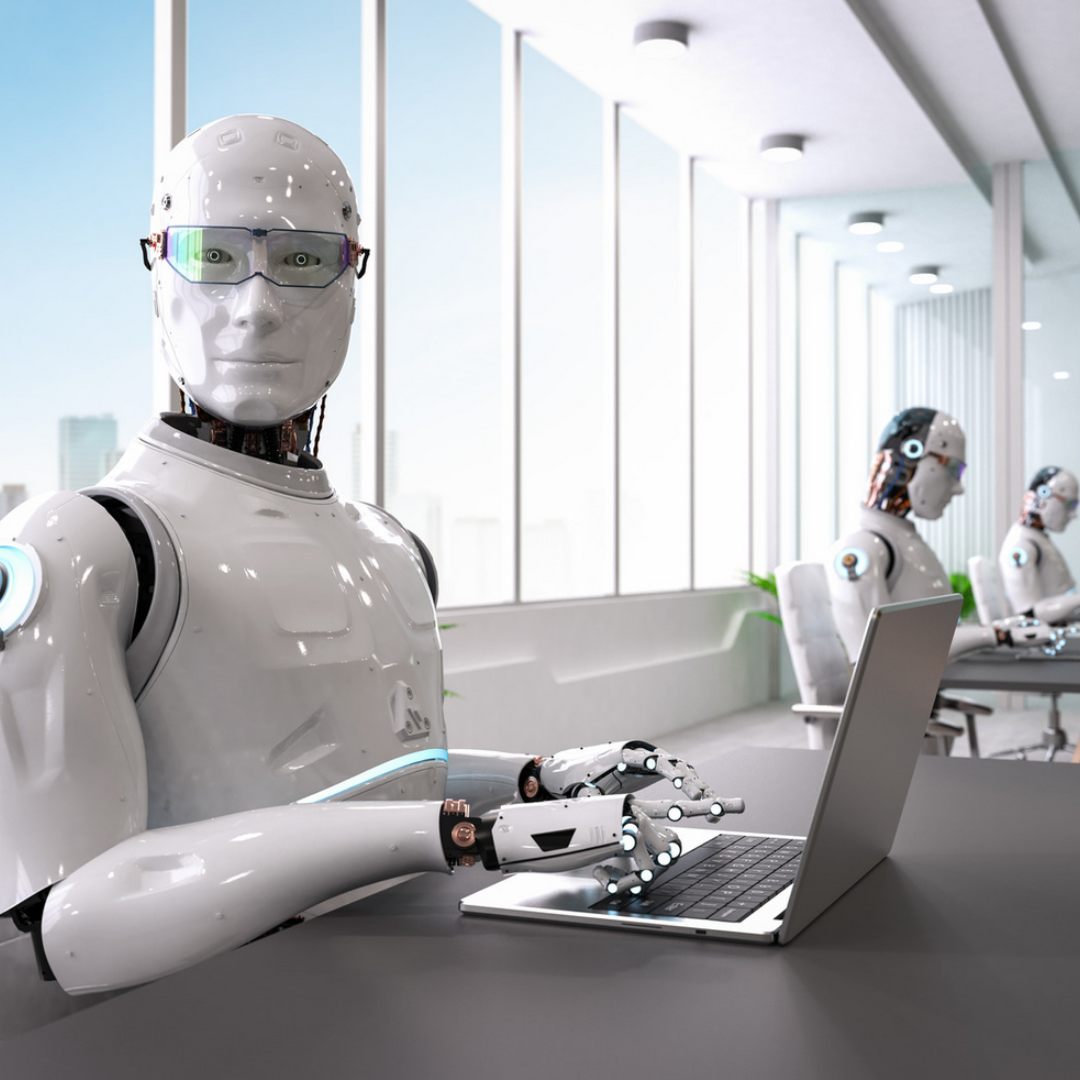
Once upon a time, robots were a dream — mechanical characters from science fiction movies who could talk, walk, and think. Today, that imagination has become a real, visible part of our world. From robotic arms assembling cars to drones delivering packages and AI-driven assistants helping with surgeries, robotics has become one of the most transformative technologies of our era.
But the real story is just beginning. Robotics is evolving rapidly, not only becoming faster and stronger but also smarter. Machines are learning, adapting, and making decisions — bridging the gap between physical mechanics and digital intelligence.
This article explores the future of robotics, how machines are becoming smarter, the technologies driving them, their impact on industries, and what lies ahead for humans in this intelligent robotic age.
Understanding Robotics
What Is Robotics?
Robotics is the branch of engineering and science that deals with the design, construction, operation, and use of robots.
A robot is a programmable machine capable of carrying out a series of actions automatically or semi-autonomously.
In simple terms:
Robotics is about building machines that can perform human-like tasks — sometimes faster, more accurately, and tirelessly.
The Evolution of Robots
Robots have come a long way since their earliest forms in manufacturing lines.
Early Robots (1950s–1970s):
- Mostly mechanical arms used in factories for repetitive assembly tasks.
- No intelligence — only followed fixed commands.
Industrial Revolution in Robotics (1980s–2000s):
- Integration of sensors, cameras, and simple decision-making.
- Widespread in automotive and electronics industries.
Modern Era (2010s–Now):
- Rise of Artificial Intelligence (AI), Machine Learning (ML), and IoT.
- Robots can now see, think, learn, and adapt to environments.
The next chapter? Robots that understand context, collaborate with humans, and evolve independently.
How Robots Are Becoming Smarter
Smart robots don’t just perform programmed tasks — they observe, learn, and improve.
Their intelligence comes from several key technologies working together.
1. Artificial Intelligence (AI)
AI is the brain behind modern robotics.
It enables robots to analyze data, recognize patterns, and make decisions.
Examples of AI in Robotics:
- Voice assistants like Alexa and Siri understanding speech.
- Autonomous vehicles recognizing road signs.
- Industrial robots adjusting assembly speed based on workload.
Through AI, robots can operate in unpredictable environments — not just fixed factory lines.
2. Machine Learning (ML)
Machine Learning is a subset of AI that lets robots learn from experience.
Instead of relying only on human-coded instructions, ML enables robots to improve automatically over time.
Example:
A cleaning robot can map your home once and later learn to navigate more efficiently, avoiding obstacles better each day.
In manufacturing, ML algorithms detect defects faster and predict when machines will need maintenance.
3. Computer Vision
Robots are gaining the power of sight.
Through computer vision, they use cameras and sensors to interpret visual data — identifying objects, distances, shapes, and even human emotions.
Applications:
- Drones mapping landscapes.
- Self-driving cars identifying pedestrians.
- Quality inspection robots detecting flaws in products.
Computer vision transforms robots from blind machines into perceptive entities that understand their surroundings.
4. Natural Language Processing (NLP)
Robots are learning to understand and respond to human language.
Example:
Chatbots and customer service robots interpret text and speech using NLP.
Healthcare robots can converse with patients, collect information, and offer assistance.
This language intelligence is what allows robots to integrate smoothly into human workflows.
5. Internet of Things (IoT) Integration
IoT connects devices, sensors, and systems through the internet.
When combined with robotics, it creates smart ecosystems where machines share information and make collective decisions.
Example:
In a smart factory, robots, machines, and logistics systems communicate automatically — optimizing production without human supervision.
IoT allows real-time monitoring and coordination, enabling efficiency at massive scales.
6. Edge Computing
Modern robots process data locally — instead of sending it to distant servers — reducing response time.
This concept, called edge computing, enables real-time decisions in critical environments like healthcare or autonomous vehicles.
7. Cloud Robotics
Cloud-based platforms let multiple robots share data, updates, and learning experiences.
For instance, if one robot learns a new skill, others connected to the same cloud can learn it instantly.
This makes collective intelligence in robotics a real possibility — where robots learn as a community.
How Robots Learn Like Humans
Modern robotics mimics the way humans learn: through observation, feedback, and repetition.
1. Sensory Input
Robots collect data through sensors, cameras, microphones, and touch modules.
2. Data Processing
AI interprets the data to identify patterns, actions, or anomalies.
3. Action
Based on analysis, robots execute decisions autonomously.
4. Feedback Loop
If the outcome isn’t accurate, the robot adjusts and learns from its mistakes.
Over time, this feedback cycle turns simple automation into adaptive intelligence.
Types of Smart Robots in Use Today
Let’s look at where robotics is already reshaping industries and lives.
1. Industrial Robots
Used in manufacturing, assembly, packaging, and welding.
Modern robots have sensors and AI to improve accuracy and reduce waste.
Example:
Automotive companies use collaborative robots (“cobots”) to assist human workers in precision tasks.
2. Service Robots
Assist humans in homes, offices, and businesses.
Examples:
- Cleaning robots like Roomba.
- Delivery robots in hotels.
- Restaurant serving robots.
They focus on convenience, time-saving, and hygiene.
3. Medical Robots
Robotics in healthcare has become revolutionary.
Examples:
- Surgical robots assisting doctors with delicate operations.
- Exoskeletons helping patients walk again.
- Pharmacy robots dispensing medicines automatically.
AI-powered robots are even analyzing X-rays and predicting patient risks.
4. Military and Defense Robots
Used for reconnaissance, bomb disposal, and logistics.
Autonomous drones and robotic dogs are becoming vital for national security.
5. Agricultural Robots
Farm robots automate planting, watering, and harvesting — improving crop yields and reducing labor costs.
Example:
AI drones scan crops for pests or nutrient deficiencies.
6. Autonomous Vehicles
Self-driving cars and trucks are mobile robots that use AI, sensors, and GPS to navigate roads safely.
Companies like Tesla, Waymo, and others are testing fully autonomous transportation systems.
7. Educational and Companion Robots
Interactive robots teach coding, math, or language skills.
Social robots provide companionship for elderly individuals, offering emotional and conversational support.
How Robotics Is Transforming Industries
Robotics is no longer limited to manufacturing — it’s changing every major sector.
1. Healthcare
- Precision surgeries
- Remote robotic consultations
- Automated pharmacy systems
Impact: Safer procedures, faster recovery, and better access to care.
2. Manufacturing
- 24/7 operation capability
- Predictive maintenance using AI
- Error-free assembly lines
Impact: Cost savings, efficiency, and higher quality production.
3. Logistics and Warehousing
- Automated guided vehicles (AGVs)
- Smart sorting systems in e-commerce
- Drone deliveries
Impact: Faster order fulfillment and reduced labor dependency.
4. Agriculture
- Crop monitoring drones
- Harvesting and soil analysis robots
Impact: Higher productivity and eco-friendly farming.
5. Education and Research
Robots are teaching, demonstrating experiments, and conducting repetitive lab work.
Impact: Better learning experiences and reduced human error.
6. Retail and Hospitality
- Service robots greeting customers.
- Inventory-checking robots in stores.
- QR-based robot waiters in restaurants.
Impact: Improved customer engagement and faster service delivery.
How Robots Are Becoming Emotionally Intelligent
Next-generation robots are not just intelligent — they’re emotionally aware.
With affective computing and AI emotion recognition, robots can interpret facial expressions, voice tone, and body language.
Example:
Social robots in healthcare respond with empathy to patient moods, while customer-service robots adjust tone based on user frustration levels.
This emotional awareness is shaping human-like communication between man and machine.
Ethical and Social Implications of Smart Robotics
As robots become more advanced, they also raise complex questions.
1. Job Displacement
Automation replaces repetitive jobs but also creates new roles in robot design, programming, and maintenance.
2. Privacy and Data Security
Smart robots collect massive amounts of data — raising concerns about who owns and controls it.
3. Dependency
Over-reliance on robots could lead to reduced human skills and interaction.
4. Moral Responsibility
If a robot makes a wrong decision, who’s accountable — the developer, the company, or the robot itself?
Balancing innovation with responsibility will define the future of robotics.
The Future: Where Are Robots Headed?
Experts predict that by the next decade, robotics will become as common as smartphones.
Here’s what to expect in the near future.
1. Collaborative Robots (Cobots) Everywhere
Humans and robots will work side by side safely — sharing workloads in offices, hospitals, and factories.
2. Fully Autonomous Systems
Self-operating vehicles, delivery drones, and warehouse bots will function without human control.
3. AI-Powered Creativity
Robots will create art, music, and even design new products using generative AI.
4. Swarm Robotics
Groups of small robots will work together like colonies — useful in exploration, farming, and disaster management.
5. Human Augmentation
Robotic exoskeletons and prosthetics will enhance human strength and mobility.
6. Space Robotics
Robots will explore distant planets, build colonies, and perform tasks impossible for humans.
The line between humans and machines will continue to blur — making robotics a core part of life itself.
Challenges Ahead for Robotics
Despite the progress, robotics still faces technical and social challenges:
- High development costs.
- Need for stronger AI ethics and safety standards.
- Power consumption and battery limitations.
- Public acceptance and trust in autonomous systems.
The next era of robotics will focus on making robots not just smarter, but also safer, ethical, and sustainable.
Conclusion
The future of robotics is not about replacing humans — it’s about enhancing human potential.
Machines are evolving from tools to teammates, from executors to collaborators.
Through AI, ML, and human-like perception, robots are becoming faster learners, better communicators, and independent decision-makers.
They are transforming industries, reshaping societies, and redefining what it means to work, learn, and live.
One thing is clear — the smarter robots become, the smarter the world around us will be.
