


Sequels are tricky terrain. They carry the burden of expectation, the nostalgia of the first film, and the pressure to deliver something new without losing the essence of what worked earlier. When De De Pyaar De released in 2019, it struck a refreshing chord with audiences by tackling age-gap relationships with humor, honesty, and emotional depth. So when De De Pyaar De 2 arrived, it came with a promise: to take that conversation forward, to grow its characters, and to explore love in a more layered, mature, yet entertaining way.
Thankfully, De De Pyaar De 2 not only holds up to that promise but evolves into a far richer story. It is a sequel with heart, humor, and an unmistakable Ajay Devgn swagger—wrapped in a narrative that is both contemporary and delightfully chaotic. It is a film that blends comedy with real relationship conflicts, and drama with the awkwardness that only blended families can produce.
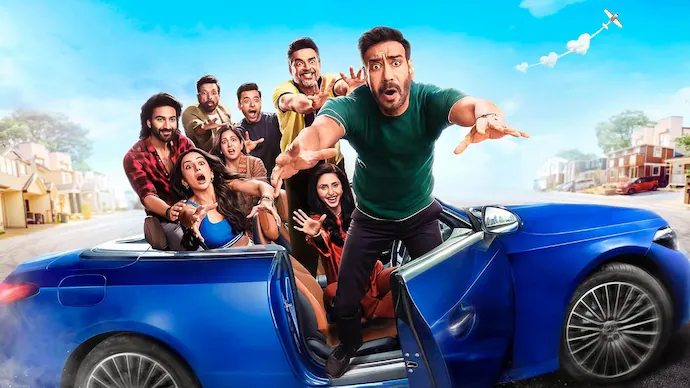
✨ Story: When Past and Present Collide Again
De De Pyaar De 2 picks up a few years after the events of the first film. Ashish (Ajay Devgn) and Ayesha (Rakul Preet Singh) are now in a steady, emotionally secure relationship, finally past the awkward stage of age comparisons, ex-wife confrontations, and family drama. Or so they believe.
While the first film dealt with the difficulties of introducing a much-younger girlfriend to one’s grown-up children and ex-wife, the sequel reverses the lens: this time, Ayesha’s world becomes the center of chaos.
A new conflict emerges when Ayesha’s past resurfaces.
Her career is flourishing, she has become a strong name in her industry, and people around her admire her independence. Yet there is one part of her life she has always avoided discussing openly—her estranged family and a past relationship that never found closure.
The film takes a bold step by exploring not just Ashish’s complexities but Ayesha’s too, making the sequel feel more balanced and meaningful. Ayesha’s former fiancé, Kabir, re-enters her life—not as a villain but as someone who still carries unresolved emotions. His reappearance triggers insecurities in Ashish, who begins to question whether their age gap might finally start working against them.
The family chaos returns—bigger, louder, and funnier.
Ashish’s ex-wife Manjana (Tabu) and the children once again find themselves tangled in the aftermath of this new tension. But this time, instead of being obstacles, they play surprising catalysts in strengthening Ashish and Ayesha’s relationship. Watching Tabu’s character navigate her mature yet mischievous wisdom is one of the film’s biggest delights.
While the premise is simple, the film thrives on awkward conversations, emotional confrontations, humor rooted in generational differences, and the unpredictable nature of relationships. It isn’t just a love triangle—it’s a triangle of personalities, insecurities, and life choices.
✨ Performances: The Film’s Backbone
Ajay Devgn as Ashish
Ajay Devgn reprises his role with effortless charm. He brings a balance of vulnerability and maturity, portraying a man who is older, wiser, but still deeply imperfect. His struggle with age, self-doubt, and fear of emotional loss is incredibly relatable. The film gives him plenty of moments to shine—especially in scenes where humor transitions into emotional weight.
His comic timing, dry wit, and signature straight-faced humor continue to be highlights. But more importantly, his emotional scenes are nuanced, not melodramatic. Ajay plays Ashish as someone who wants to be progressive but is still haunted by traditional insecurities—a fascinating contradiction that he delivers beautifully.
Rakul Preet Singh as Ayesha
Rakul once again proves why the character of Ayesha works so well on screen. She brings vibrance, confidence, and sensitivity to the role. In the sequel, she gets a much more layered arc—exploring her past, her vulnerabilities, and her internal conflicts.
Rakul shines brightest in scenes where Ayesha wrestles between her love for Ashish and her unresolved emotional history. She manages to communicate frustration, longing, and affection with ease. Her chemistry with Ajay remains natural and engaging, but the film also allows her to stand strong as a character on her own.
Tabu as Manjana (the ex-wife)
If De De Pyaar De 2 had a secret weapon, it is undoubtedly Tabu.
She elevates every scene she is in—with her effortless poise, flawless comic timing, and magnetic presence. Instead of playing the bitter ex-wife stereotype, Tabu’s Manjana remains wise, witty, and slightly wicked in all the right ways.
In the sequel, she becomes something of a confidante and unexpected voice of reason for both Ashish and Ayesha. Her playful stabs at Ashish’s insecurities and her surprisingly warm interactions with Ayesha make her one of the most memorable characters in the film.
Supporting Cast
Ashish’s adult children get more screen time in this installment, and their roles—rather than being filler—become key narrative drivers. They add humor, conflict, and emotional nuance to the story.
Kabir, Ayesha’s ex, is written not as a villain but as a dignified, conflicted man who adds tension without becoming caricature. His presence enriches the story and avoids the usual tropes found in Bollywood love triangles.
✨ Humor: Intelligent, Situational, and Deliciously Awkward
One of the strongest qualities of De De Pyaar De was its humor—clean, situational, and rooted in real human awkwardness. Thankfully, the sequel maintains that tone.
The best humor comes from generational gaps
The film smartly uses:
- Ashish’s old-school thinking vs. Ayesha’s modern practicality
- Manjana’s sarcastic commentary
- The children’s blunt, unfiltered reactions
- And the painfully funny situations that arise when exes and current partners share the same space
Some scenes—especially those involving dinner-table arguments, therapy sessions, and unexpected confrontations—spark laughter precisely because they feel so real.
The film avoids slapstick, opting instead for clever one-liners, razor-sharp sarcasm, and situational comedy that flows naturally from the characters’ personalities.
✨ Emotional Core: Love, Insecurity, and the Fear of Losing Someone
While the film is packaged as a rom-com, its emotional foundation is surprisingly strong.
The story touches upon deeper themes:
- Age insecurity and its silent effects on a relationship
- Forgiveness and the difficulty of letting go of past hurt
- Blended family dynamics—messy, unpredictable, but full of heart
- The pressure of societal judgment, especially in unconventional relationships
- The vulnerability of second chances, which require far more courage than first ones
The most emotionally impactful scenes are those where Ashish and Ayesha face their fears head-on—age differences, past traumas, regrets, misunderstandings, and the painful realization that love alone is sometimes not enough; effort and communication matter just as much.
Yet the film never becomes heavy-handed. Its emotional notes are gentle, real, and beautifully woven into the narrative.
✨ Direction: A Mature, Balanced, and Engaging Sequel
The director takes a refreshing approach by not trying to outdo the first film with unnecessary grandeur. Instead, the sequel focuses on storytelling, character development, and natural humor.
The pacing is smooth, allowing both comedy and emotions to breathe.
The direction shines in:
- Handling multi-character scenes
- Crafting arguments that feel raw rather than dramatic
- Keeping conflicts relatable and believable
- Maintaining a consistent tone throughout the film
The sequel feels like a natural extension of the first movie rather than a forced follow-up.
✨ Writing: Smart, Crisp, and Deeply Relatable
The writing is perhaps the film’s greatest strength.
- Dialogue: The dialogues are sharp, witty, and emotionally intelligent. They capture the messy, unfiltered nature of real relationships—where love, frustration, sarcasm, and vulnerability often overlap.
- Character Arcs: Every major character undergoes growth. Ashish confronts insecurity, Ayesha faces her emotional past, and Manjana continues to evolve into a balanced, empathetic partner in the family dynamic.
- Conflict Design: The conflicts are realistic—rooted in human fear rather than villainous intentions. This makes the story far more engaging and grounded.
✨ Music & Cinematography
While the film isn’t music-heavy, the soundtrack effectively enhances emotional moments. The songs range from romantic melodies to playful tracks, each fitting seamlessly into the narrative.
Cinematography remains bright, modern, and elegantly composed. The film avoids over-the-top glamour, choosing instead relatable settings—homes, workplaces, family gatherings—which add to its authenticity.
✨ What Works Brilliantly
✔ A grounded, mature storyline
The sequel avoids clichés and treats its characters with dignity.
✔ Strong performances, especially from Ajay Devgn and Tabu
Their chemistry—playful yet emotionally layered—is a highlight.
✔ Realistic humor
The film relies on subtle, relatable humor instead of forced comedy.
✔ Emotional depth
The conflicts feel natural and meaningful.
✔ Balanced portrayal of relationships
The film understands that love is messy, imperfect, and worth fighting for.
✨ What Could Have Been Better
While the film is engaging, a few areas could have been tighter:
- Some arguments feel slightly stretched for dramatic effect.
- A few supporting characters could have gotten clearer closure.
- The climax—while heartfelt—may feel predictable for some viewers.
However, none of these issues significantly undermine the film’s overall impact.
✨ Final Verdict: A Warm, Witty, and Emotionally Satisfying Sequel
De De Pyaar De 2 stands out as a sequel that does more than revisit familiar territory — it expands on it with confidence and charm. The film carries forward the essence of the original while allowing its story to grow, offering a narrative that feels both engaging and thoughtfully constructed. Its humour is light, natural, and rooted in relatable situations.
What makes the film especially appealing is its emotionally intelligent approach to relationships. Instead of relying on exaggerated drama, it focuses on genuine conversations, evolving bonds, and the complexity of love in modern life. The characters are given space to learn, adapt, and express themselves in ways that feel honest and refreshing.
Most importantly, the film respects its audience. It understands that viewers appreciate authenticity, maturity, and stories that reflect real experiences. De De Pyaar De 2 manages to entertain while also staying grounded, making it a sequel with both heart and insight.
