

Education has always been the foundation of progress. From chalkboards to interactive screens, from handwritten notes to digital whiteboards, every generation has witnessed a transformation in how knowledge is shared. But never before has the change been as fast, powerful, and far-reaching as it is today.
Technology has reshaped education from a classroom-confined experience into a global, flexible, and personalized ecosystem. It has redefined how students learn, how teachers teach, and how institutions operate. From artificial intelligence and virtual classrooms to online assessments and digital libraries, education has entered a new era — one that is open, inclusive, and constantly evolving.
This transformation is not just about gadgets or software; it’s about creating smarter learners, informed educators, and connected classrooms.
The Digital Shift in Learning
The integration of technology into education started gradually but gained unstoppable momentum in the last decade. What began as basic computer labs in schools has evolved into digital learning ecosystems where students can access lectures, submit assignments, and interact with educators from anywhere in the world.
With the rise of cloud computing, internet accessibility, and affordable devices, education has broken the physical boundaries of schools and universities. Students now learn through apps, virtual classrooms, and even AI-powered tutors.
The most significant change lies in accessibility. Technology has turned education into a global right instead of a regional privilege. A learner in a rural village can access the same quality resources as a student in a major city.
Key Technologies Driving Educational Transformation
Let’s explore the most impactful technologies that are shaping modern education.
1. Artificial Intelligence and Machine Learning
AI has entered classrooms in a subtle yet transformative way. Intelligent systems can now analyze student behavior, track learning progress, and personalize content to suit individual needs.
Examples of AI in education:
- Adaptive learning platforms that adjust difficulty based on student performance.
- AI chatbots that answer student queries instantly.
- Automated grading systems that save teachers countless hours.
AI also assists educators in identifying students who need extra attention, ensuring that no one is left behind. This data-driven approach to learning makes education both efficient and inclusive.
2. Virtual Classrooms and Video Learning
Video conferencing platforms have turned homes into classrooms. Whether through live online lectures or recorded sessions, learning has become more flexible.
Benefits of virtual classrooms:
- Students can attend from anywhere.
- Classes can be recorded and replayed.
- Teachers can use multimedia to explain complex concepts.
- Collaboration continues through discussion boards and group projects.
Virtual classrooms encourage self-paced learning and empower students to revisit lessons as often as needed — something traditional classrooms could never offer.
3. Learning Management Systems (LMS)
Learning Management Systems have become the digital backbone of modern education. These platforms organize, track, and deliver educational content while enabling teachers to monitor student progress.
Popular LMS tools include:
- Google Classroom
- Moodle
- Canvas
- Blackboard
Through LMS, teachers can upload assignments, conduct quizzes, share resources, and even provide grades — all from one central platform. Students, on the other hand, can learn at their own pace and access materials anytime.
4. Cloud Computing
Cloud technology has completely revolutionized how educational content is stored and shared. It ensures that learning materials are accessible 24/7 without dependence on physical devices.
How the cloud helps education:
- Secure data storage for institutions and learners.
- Seamless sharing of large files, such as lectures or research papers.
- Easy collaboration on group projects in real time.
- Cost-effective storage for schools and universities.
Cloud computing supports remote and hybrid learning models effortlessly. It provides scalability and reliability to educational institutions of all sizes.
5. Gamification and Interactive Learning
Gamification adds elements of play to the learning process — turning lessons into engaging experiences.
Examples of gamified learning:
- Quizzes that reward points and badges.
- Simulation-based tasks to solve real problems.
- Leaderboards that encourage healthy competition.
This approach increases motivation and helps retain attention, especially for younger learners. It transforms passive learning into active participation.
6. Virtual Reality (VR) and Augmented Reality (AR)
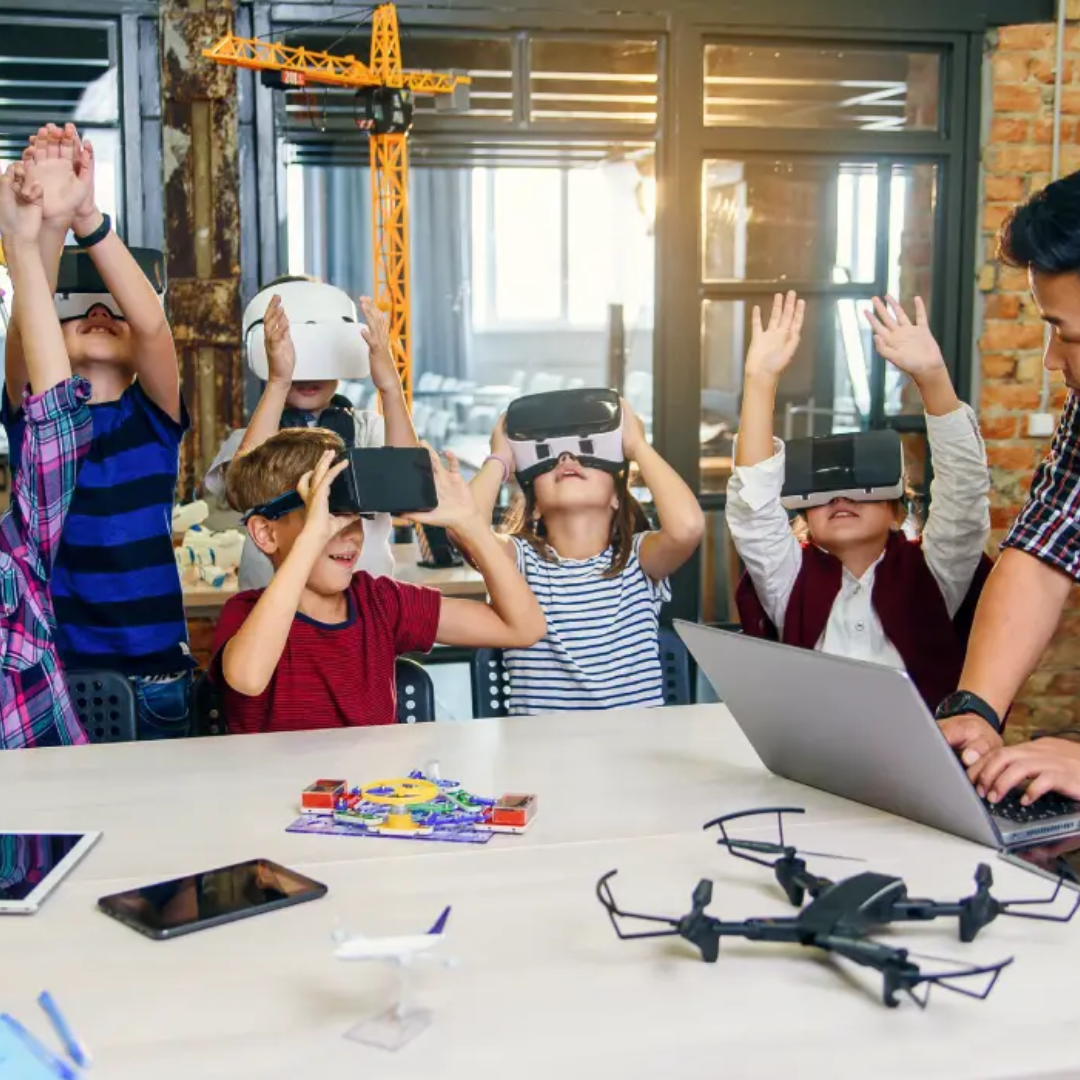
VR and AR are taking education beyond imagination. Students can now explore the solar system, conduct virtual lab experiments, or even visit historical monuments without leaving the classroom.
Impact of VR and AR in learning:
- Immersive, hands-on experiences make complex topics easier to understand.
- Encourages curiosity and exploration.
- Enhances memory retention by connecting visuals with learning.
For instance, medical students can practice virtual surgeries, and engineering students can visualize 3D models of machines — all through immersive technology.
7. Big Data and Analytics
Big data in education helps institutions understand learning patterns and improve teaching strategies.
Applications include:
- Tracking student engagement in digital platforms.
- Measuring effectiveness of teaching methods.
- Predicting dropouts or identifying skill gaps.
When data is used ethically, it can create a highly adaptive educational ecosystem that continuously evolves based on real performance insights.
8. E-Learning Platforms and MOOCs
Massive Open Online Courses (MOOCs) and e-learning portals have made world-class education accessible to anyone with an internet connection.
Leading platforms include:
- Coursera
- edX
- Udemy
- Khan Academy
These platforms allow professionals and students alike to learn new skills, earn certificates, and stay competitive in the job market — without needing to enroll in formal institutions.
How Technology Benefits Students
Technology has given learners a level of control and flexibility that traditional classrooms could never offer.
Key advantages:
- Personalized learning: Adaptive software identifies strengths and weaknesses and tailors lessons accordingly.
- Global accessibility: Anyone can access the same content, no matter where they live.
- Interactive experience: Multimedia content helps students visualize complex ideas.
- Skill-based growth: Platforms teach job-oriented skills like coding, marketing, and design.
- Continuous feedback: Students receive instant results from assessments and quizzes.
Education has shifted from memorization to exploration — from passive listening to active engagement.
How Technology Empowers Teachers
Educators are equally benefitting from this revolution.
Ways technology supports teachers:
- Automating repetitive tasks such as grading and attendance.
- Providing analytics to measure student understanding.
- Offering digital libraries for teaching resources.
- Allowing flexible teaching modes — synchronous or asynchronous.
Teachers are now facilitators, guiding students through personalized journeys rather than delivering one-size-fits-all lectures.
The Role of Mobile Technology
Smartphones have become portable classrooms. With educational apps, digital textbooks, and online courses available on mobile devices, learning can happen anywhere — in transit, at home, or even during breaks.
Mobile learning breaks the time and space barriers, especially in regions where traditional education infrastructure is limited. It ensures inclusivity and encourages lifelong learning habits.
The Challenges of EdTech Adoption
While the transformation is impressive, it comes with challenges that must be addressed.
- Digital divide: Not every student has equal access to devices or high-speed internet.
- Data privacy: Storing personal information online requires strict protection measures.
- Screen fatigue: Excessive screen time can impact attention and health.
- Teacher training: Many educators still need guidance in effectively using new tools.
- Over-dependence on technology: True learning still requires critical thinking and human mentorship.
Balancing innovation with responsibility will determine the long-term success of tech-driven education.
Future of Education: What Lies Ahead
Education in the next decade will be shaped by intelligent systems, immersive experiences, and borderless collaboration.
- AI tutors will personalize learning for each student.
- Blockchain will secure academic records and certificates.
- 5G networks will make remote learning smoother and more immersive.
- Hybrid classrooms will blend physical and digital experiences.
Ultimately, education will evolve into a lifelong journey — supported by technology but driven by curiosity.
Conclusion
Technology is no longer an accessory to education — it is its backbone. It has democratized knowledge, connected continents, and opened new doors for creativity and inclusivity. The modern classroom is no longer confined by walls or limited by resources. It’s an open ecosystem that thrives on innovation.
The transformation is ongoing, but one thing is clear: the future of education is digital, data-driven, and deeply human at its core. Technology is not replacing teachers or institutions; it’s empowering them to reach new heights.
Education is not just being transformed by technology — it is being reimagined.
