

Every time you use an app to book a cab, check the weather, or make an online payment, something invisible happens in the background — a seamless exchange of information between systems that don’t even know each other.
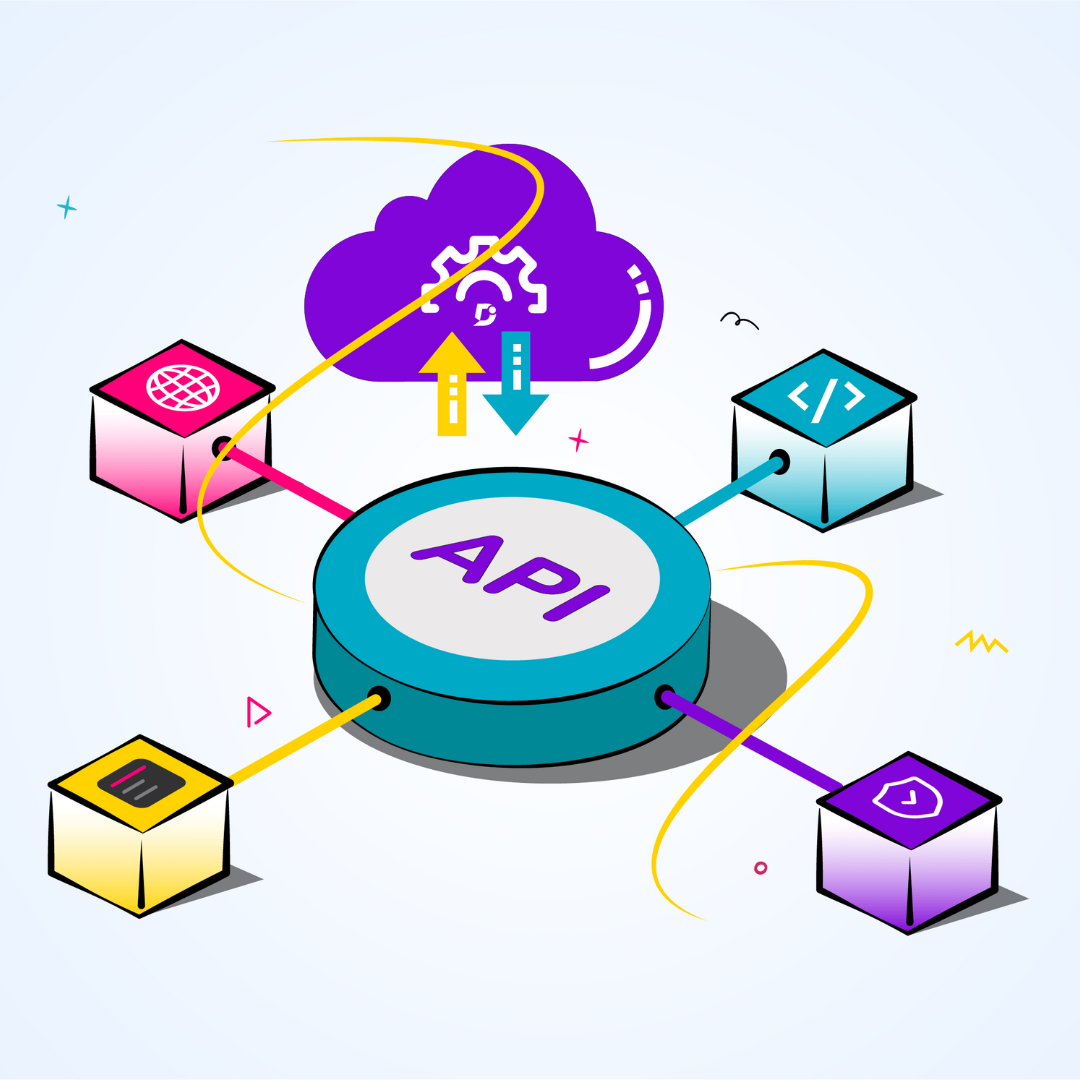
This invisible bridge that connects one digital service to another is called an API, short for Application Programming Interface.
While APIs work silently, they are the backbone of the modern internet.
From social media integrations to global banking systems, APIs allow apps, websites, and devices to talk to each other efficiently and securely.
This detailed guide explains what APIs are, how they work, their types, real-world examples, and why they are the hidden engines driving almost every online interaction today.
1. What Exactly Is an API?
At its simplest, an API is a set of rules and tools that lets one software application communicate with another.
Think of it as a messenger that takes a request from you to a system, tells it what you want, and then brings the response back.
Simple Analogy:
Imagine a restaurant.
- You (the user) are sitting at a table reading the menu.
- The kitchen (the system) prepares food but doesn’t talk to customers directly.
- The waiter (the API) takes your order, tells the kitchen what to make, and brings your food back.
That waiter is what APIs do in the digital world — connecting users, apps, and systems.
2. Why APIs Are So Important
APIs are the glue that holds digital ecosystems together. Without them, most online services wouldn’t exist in their current form.
Here’s why they’re crucial:
- Connectivity: They allow completely different software systems to communicate effortlessly.
- Efficiency: APIs let developers reuse existing services instead of rebuilding features from scratch.
- Scalability: Businesses can integrate new tools and expand faster without breaking old systems.
- Innovation: APIs allow third-party developers to build creative extensions or services on existing platforms.
- Automation: They enable machines to perform tasks without human input — essential for AI, IoT, and cloud services.
In short, APIs are the digital world’s translators and connectors.
3. How APIs Actually Work (Step by Step)
To understand APIs better, let’s walk through a basic example — checking the weather on your phone.
Step 1: The Request
Your weather app sends a request to a weather service provider (like OpenWeatherMap).
This request follows a specific format, usually containing:
- The city name
- Your app’s identification key
- The type of data needed (temperature, humidity, etc.)
Step 2: The API Gateway
The API server receives your request, validates it, and passes it to the weather database.
Step 3: The Processing
The weather service fetches data, processes it, and prepares a response (usually in JSON or XML format).
Step 4: The Response
The API sends this data back to your app, which then displays “28°C, Sunny” on your screen.
You never talk to the database directly — the API handles the communication safely and efficiently.
4. Key Components of an API
Every API follows a structure that defines how data flows between systems.
1. Endpoint
A specific URL where requests are sent.
Example: https://api.weather.com/v1/city/london
2. Request
The message your app sends to the API, specifying what data it wants.
3. Response
The answer the API sends back, often formatted as structured data (like JSON).
4. Methods
APIs use predefined actions called methods — the “verbs” of communication:
- GET: Retrieve data
- POST: Send new data
- PUT: Update existing data
- DELETE: Remove data
5. Authentication
APIs often need a security key (API Key or OAuth Token) to ensure only authorized users can access them.
5. Types of APIs in the Modern World
Different APIs serve different purposes. Here’s a breakdown:
1. Open APIs (Public APIs)
- Freely available to developers and the public.
- Used to promote innovation and collaboration.
- Example: Google Maps API, OpenWeather API.
2. Partner APIs
- Shared between business partners with certain agreements or contracts.
- Example: A travel website connecting with airline data systems.
3. Internal APIs (Private APIs)
- Used within organizations to connect internal systems securely.
- Example: HR system talking to payroll software.
4. Composite APIs
- Combine multiple services or data sources into a single response.
- Example: A shopping app fetching prices, stock info, and delivery time in one call.
6. Common API Architectures
APIs aren’t one-size-fits-all — they follow different design models, each suited to a specific purpose.
1. REST (Representational State Transfer)
- Most widely used.
- Uses standard HTTP methods (GET, POST, etc.).
- Simple, fast, and ideal for web and mobile apps.
2. SOAP (Simple Object Access Protocol)
- Older but still used in enterprise systems.
- Follows strict structure and XML formatting.
- Often used in banking and legacy applications.
3. GraphQL
- A modern alternative that lets clients request only the exact data they need.
- Great for efficiency and reducing data overload.
4. gRPC
- Developed by Google.
- Uses binary format for faster communication — perfect for real-time systems.
Each architecture balances speed, complexity, and compatibility differently.
7. Real-World Examples of APIs in Action
APIs aren’t limited to tech giants — they’re everywhere around you.
1. Payment Gateways
When you pay using Razorpay, PayPal, or Stripe, APIs securely transfer your payment data from the app to the bank and back.
2. Travel and Booking Apps
Flight aggregators like Skyscanner use APIs from airlines to display live pricing and seat availability.
3. Social Media Integration
Login with Google or Facebook? That’s an authentication API letting apps verify your account securely.
4. E-Commerce
APIs handle product listings, order tracking, and payment confirmations across websites.
5. Messaging Apps
APIs deliver notifications and real-time updates using cloud messaging systems.
6. Smart Devices and IoT
Your smartwatch syncing steps to your fitness app? APIs again — quietly moving data between your devices.
7. AI and Machine Learning
OpenAI, Hugging Face, and other providers let developers use trained AI models through APIs instead of downloading heavy systems.
In short, if the internet were a city, APIs would be its roads and bridges.
8. Security in APIs – Keeping the Data Safe
Because APIs handle sensitive data, security is critical.
Key Security Practices:
- Authentication: Confirm who is accessing the API using keys or tokens.
- Authorization: Control what each user can access.
- Encryption: Protect data during transmission using HTTPS.
- Rate Limiting: Prevent abuse by limiting how often APIs can be called.
- Input Validation: Avoid malicious code injection or data manipulation.
- Audit Logs: Record all interactions for transparency.
Poorly protected APIs are among the most common cybersecurity vulnerabilities — so modern companies invest heavily in API security layers.
9. How Developers Use APIs
Developers don’t reinvent the wheel every time they build a new app.
Instead, they combine APIs like Lego blocks — using existing services to speed up development.
Example Workflow:
- Use Google Maps API for location data.
- Integrate Twilio API for SMS notifications.
- Connect Stripe API for payments.
- Pull analytics from a marketing API.
By combining these, developers build full-fledged products quickly and affordably.
This approach is called “API-First Development” — where applications are designed around APIs from day one.
10. Business Value of APIs
APIs aren’t just technical tools; they are powerful business assets.
1. New Revenue Channels
Companies like Google and Amazon generate billions through API access models and cloud services.
2. Ecosystem Growth
APIs allow third-party developers to build on top of existing platforms — expanding reach organically.
3. Faster Partnerships
Businesses integrate faster through partner APIs, reducing time to market.
4. Customer Experience
Real-time updates, personalization, and automation all rely on APIs to make user experiences seamless.
APIs transform standalone businesses into connected ecosystems.
11. The Role of APIs in Cloud Computing
The entire concept of cloud technology runs on APIs.
They let applications interact with storage, computing, and networking resources hosted online.
Examples:
- AWS, Azure, and Google Cloud all expose APIs for developers to manage virtual servers and services.
- Cloud APIs make it possible to scale apps globally within minutes.
APIs enable automation, orchestration, and deployment — the foundation of modern DevOps workflows.
12. APIs and Artificial Intelligence
AI depends heavily on APIs for distribution and accessibility.
Instead of downloading huge AI models, developers can use them via APIs:
- Text generation (ChatGPT API)
- Image recognition (Google Vision API)
- Speech synthesis (Azure Cognitive Services)
- Translation and NLP (DeepL, OpenAI Whisper)
APIs make complex AI capabilities accessible to anyone — even without deep machine learning expertise.
13. The Rise of API Economy
We live in what experts call the API Economy — a global network where digital services communicate through shared interfaces.
Why It’s a Big Deal:
- Businesses can expose their services (like payments, maps, or data) as APIs.
- Other businesses integrate those APIs to enhance their products.
- Revenue is generated from API calls, data access, or usage tiers.
Example:
Uber integrates Google Maps API, Stripe API for payments, and Twilio API for SMS — all from third-party providers.
Each of those companies earns revenue every time their APIs are used.
The API economy is essentially the digital trade route of the 21st century.
14. Future Trends in API Development
APIs continue to evolve with the internet itself.
1. API-First Architecture
Companies are designing their systems around APIs from the start — ensuring flexibility and scalability.
2. GraphQL Expansion
More developers are switching to GraphQL for faster, smarter data access.
3. AI-Generated APIs
AI tools are now being used to write, document, and test APIs automatically.
4. Standardized Security
New security protocols (OAuth 2.1, Zero Trust APIs) will become global norms.
5. Event-Driven APIs
APIs that react instantly to events — essential for IoT and real-time systems — will dominate the next decade.
APIs will no longer just connect systems — they’ll help systems adapt and evolve intelligently.
15. Challenges in API Implementation
Even though APIs power the world, they come with hurdles:
- Versioning Conflicts: Updates can break older integrations.
- Latency Issues: Poor network design leads to slow performance.
- Security Vulnerabilities: Weak endpoints can expose user data.
- Documentation Gaps: Without clear instructions, developers struggle to use APIs efficiently.
- Dependency Risks: If a third-party API shuts down, your app can break overnight.
Effective API management, clear documentation, and monitoring tools solve most of these challenges.
16. Tools Used in API Development and Testing
Developers rely on several tools to design, test, and monitor APIs:
- Postman: For testing API endpoints.
- Swagger / OpenAPI: For API design and documentation.
- Apigee: For enterprise-level API management.
- Kong / Nginx: For routing and load balancing.
- Insomnia: For testing and debugging APIs.
These tools ensure reliability, security, and scalability across different systems.
17. Why APIs Matter to Everyone, Not Just Developers
APIs affect all of us — even if we never write a single line of code.
- They make our daily lives smoother by connecting services seamlessly.
- They enable innovation by giving small startups access to big-tech tools.
- They promote transparency by letting systems exchange verified data.
- They help automation in healthcare, finance, travel, education, and entertainment.
In short, APIs are the silent architects of convenience in the digital age.
Conclusion
APIs are the unsung heroes of the internet.
They make collaboration between apps possible, power automation, and enable innovation on a global scale.
From mobile apps and cloud platforms to AI and IoT devices, APIs are the hidden connectors that turn isolated systems into a unified digital ecosystem.
Without APIs, the internet as we know it — interactive, personalized, and intelligent — simply wouldn’t exist.
The next time your app loads data, your smartwatch syncs steps, or your website fetches a live map — remember, somewhere behind the scenes, an API is quietly making it happen.
