

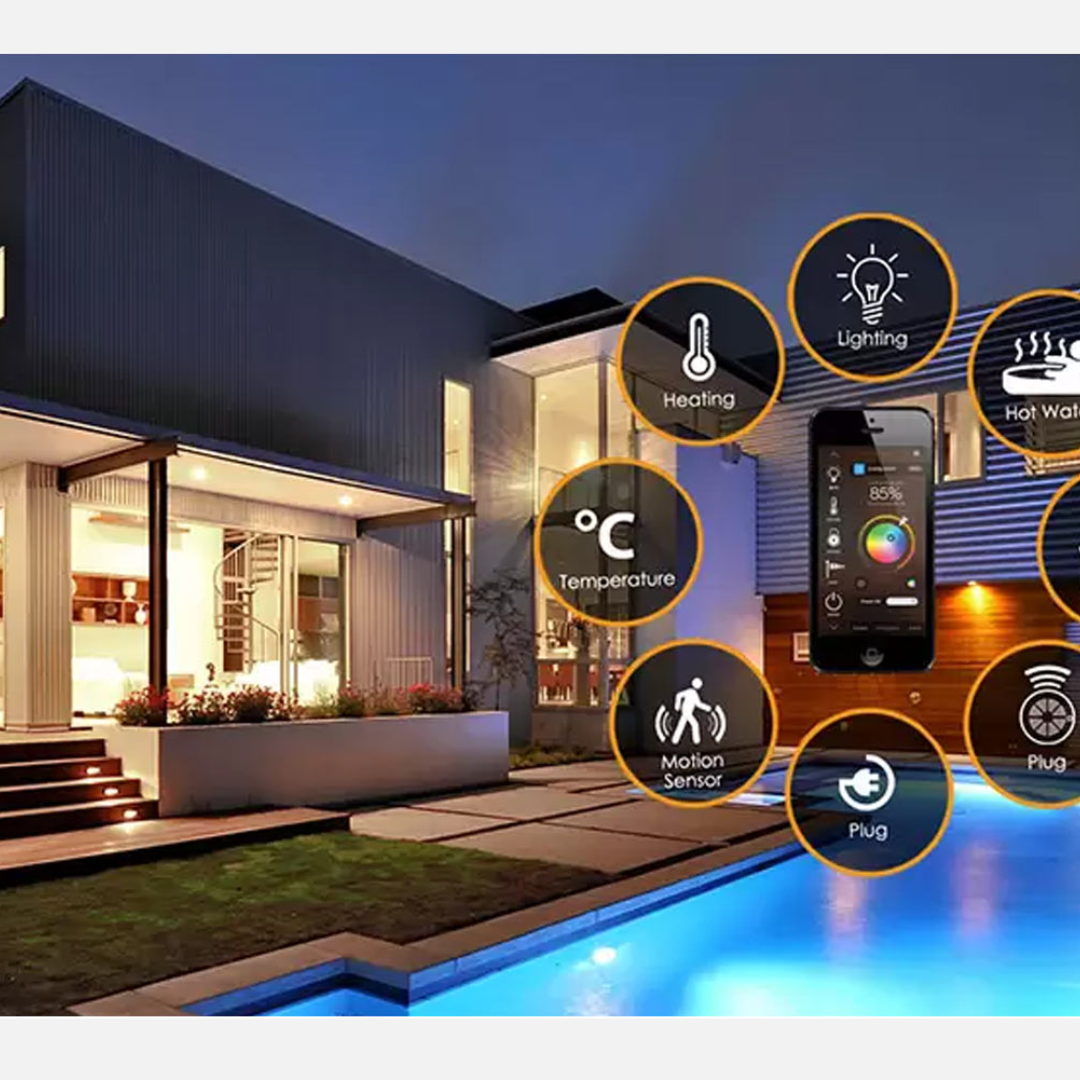
Technology is changing the way we live, one household at a time. From lights that turn on with your voice to refrigerators that remind you when groceries are running low, the modern home is becoming smarter — more responsive, efficient, and personalized.
These are not just gadgets; they form an interconnected system known as a smart home.
But what exactly makes a home “smart,” how do these systems function, and what benefits — and challenges — come with living in a connected environment?
This complete guide explains everything you need to know about smart homes — how they work, the technologies behind them, their benefits, and their future potential.
Understanding What a Smart Home Is
A smart home refers to a residence equipped with Internet-connected devices that automate, monitor, and control household functions such as lighting, temperature, security, and entertainment.
These devices communicate with each other and with you — through voice commands, apps, or AI assistants — creating a seamless digital ecosystem for daily life.
Simple Definition:
A smart home is a living space where technology and connectivity make life easier, safer, and more efficient.
In simpler words, it’s a home that thinks, reacts, and adapts to your needs automatically.
How Smart Homes Work
Smart homes operate through an interconnected network of IoT (Internet of Things) devices that communicate over Wi-Fi, Bluetooth, Zigbee, or other wireless protocols.
The system relies on three core elements:
1. Smart Devices
These are the physical components — lights, thermostats, locks, cameras, speakers — that perform actions or collect data.
2. Central Hub or Controller
The “brain” of the system. It connects and coordinates all devices.
Examples include Amazon Echo (Alexa), Google Nest Hub, or Apple HomePod.
3. User Interface
How you interact with your smart home — through mobile apps, voice commands, or automation routines.
For example:
You can say “Turn off the lights” → the command travels to your home assistant → the connected bulb receives the signal → lights go off instantly.
That’s the essence of smart home automation: communication + control + action.
Core Technologies Behind Smart Homes
Smart homes aren’t magic — they’re powered by advanced technologies that work together intelligently.
1. Internet of Things (IoT)
The foundation of all smart homes.
IoT connects devices to the internet, enabling them to send and receive data.
Example:
A smart refrigerator connected to Wi-Fi can notify your phone when milk is about to expire.
2. Artificial Intelligence (AI)
AI allows smart systems to learn your habits and predict your preferences.
Example:
Your thermostat learns your temperature preferences and adjusts automatically when you arrive home.
3. Machine Learning (ML)
Machine Learning is a part of AI that helps devices improve over time based on usage patterns.
Example:
Smart speakers recognize your voice better the more you interact with them.
4. Cloud Computing
Smart devices rely on cloud storage to process commands and updates.
Cloud services enable synchronization across devices and access from anywhere.
Example:
You can monitor your home security cameras remotely through a mobile app.
5. Voice Recognition
Voice assistants like Alexa, Siri, and Google Assistant are at the heart of many smart homes.
They interpret human speech, convert it into digital commands, and trigger the respective actions.
6. Wireless Communication Protocols
Smart homes rely on seamless wireless communication. Common standards include:
- Wi-Fi: For high-speed connectivity.
- Bluetooth: For short-range communication.
- Zigbee & Z-Wave: For reliable low-power device networking.
Key Components of a Smart Home
Let’s look at the most common elements that make up a fully functional smart home system.
1. Smart Lighting
Control your lights through voice, motion sensors, or schedules.
Features include:
- Brightness adjustment.
- Color changing.
- Energy tracking.
Example:
Philips Hue or Mi Smart LED bulbs that respond to app or voice commands.
2. Smart Thermostats
Automatically adjust heating and cooling based on your preferences and presence.
They optimize comfort and energy savings.
Example:
Google Nest Thermostat learns your routine and adjusts temperatures automatically.
3. Smart Security Systems
Protect your home through AI-driven surveillance and instant alerts.
Includes:
- Smart locks.
- Doorbell cameras.
- Motion sensors.
- Smart alarms.
Example:
A doorbell camera sends a live feed to your phone when someone rings the bell.
4. Smart Appliances
Modern appliances now come with AI features for efficiency and convenience.
Examples:
- Refrigerators that create grocery lists.
- Washing machines with remote start.
- Ovens that preheat based on recipes.
5. Smart Entertainment Systems
Integrating smart TVs, sound systems, and speakers provides personalized entertainment experiences.
Example:
Ask Alexa to “play relaxing music” and your system adjusts lighting and audio automatically.
6. Smart Curtains and Blinds
Automated shades open with sunlight and close at night for energy efficiency and privacy.
7. Smart Energy Monitors
Track energy usage in real time and provide tips to reduce wastage.
8. Smart Water Systems
Automated irrigation and leak detection systems conserve water efficiently.
9. Smart Health Devices
Fitness wearables and health trackers connect to smart systems for wellness insights.
How Automation Works in Smart Homes
Smart homes run on automation rules, also known as scenes or routines.
You can set triggers such as:
- Time (e.g., “turn off all lights at 11 PM”)
- Sensors (e.g., “turn on lights when motion is detected”)
- Location (e.g., “lock the doors when I leave home”)
This makes your home reactive — adapting to your behavior without manual control.
Benefits of Smart Homes
Smart homes offer a blend of comfort, safety, and sustainability.
1. Convenience
Control everything from your smartphone or voice command — even from miles away.
2. Energy Efficiency
Smart thermostats and lighting reduce power waste.
3. Enhanced Security
Instant alerts and remote monitoring protect your home 24/7.
4. Comfort and Personalization
Lighting, temperature, and music adjust based on your preferences.
5. Accessibility
Smart homes empower elderly and differently-abled individuals to control their environment easily.
6. Cost Savings
Though setup costs exist, long-term savings through reduced energy use are significant.
Challenges and Limitations of Smart Homes
Even smart technology has its drawbacks.
1. Privacy Concerns
Smart homes collect vast amounts of data — raising security and privacy issues.
2. Internet Dependency
Without internet connectivity, most devices lose functionality.
3. Compatibility Issues
Devices from different brands may not always work together.
4. Cost
Initial setup costs can be high, especially for large-scale automation.
5. Technical Complexity
Managing updates, connectivity, and troubleshooting requires tech knowledge.
The Role of Artificial Intelligence in Smart Homes
AI is the backbone of the modern smart home, turning automation into intelligence.
AI Functions Include:
- Learning Habits: Predicting your daily patterns.
- Voice Recognition: Distinguishing between household members.
- Predictive Control: Adjusting systems before you ask.
- Anomaly Detection: Identifying unusual activity for safety.
Example:
An AI assistant learns that you leave for work at 9 AM and automatically turns off unused devices.
This transforms a house from automated to adaptive — capable of decision-making.
Smart Homes and Sustainability
Smart technology plays a vital role in building eco-friendly homes.
Energy Conservation
- Smart thermostats reduce heating and cooling waste.
- Smart lighting systems save electricity by sensing occupancy.
Water Management
- Leak detectors and irrigation sensors minimize wastage.
Waste Reduction
- Appliances track consumption and suggest sustainable usage habits.
A truly smart home contributes not only to convenience but also to a greener planet.
Security and Privacy in Smart Homes
Since smart homes collect personal data, cybersecurity becomes essential.
Key Risks:
- Device hacking.
- Unauthorized access to cameras or data.
- Network vulnerabilities.
Safety Measures:
- Use strong, unique passwords.
- Keep devices updated with firmware patches.
- Set up separate Wi-Fi networks for IoT devices.
- Use encryption and two-factor authentication.
A secure smart home is one where convenience never compromises safety.
Smart Homes in Everyday Life
Here’s how a day in a smart home might look:
Morning:
Your alarm rings softly. Curtains open automatically. The coffee maker starts brewing as your thermostat warms the room.
Afternoon:
Your smart fridge sends a reminder for groceries. You check your security cameras remotely.
Evening:
Lights dim automatically as your favorite playlist starts. When you leave the living room, the system turns off unnecessary lights and appliances.
Night:
Doors lock automatically, and motion sensors activate for security.
This isn’t science fiction — it’s the convenience of modern life through smart automation.
The Future of Smart Homes
The smart home industry is evolving rapidly, moving toward intelligent ecosystems rather than isolated devices.
1. AI-Powered Predictive Homes
Homes that anticipate your needs and adjust automatically.
2. Integration with Renewable Energy
Homes connecting directly with solar panels, EVs, and smart grids.
3. Enhanced Interoperability
Unified platforms where all devices communicate seamlessly.
4. Emotion-Responsive Systems
Homes detecting your mood and adjusting environment accordingly.
5. Voice and Gesture Dominance
Future control will move from apps to natural communication — voice and movement.
6. Self-Maintaining Homes
AI-enabled systems performing diagnostics and repairs autonomously.
The ultimate goal: a home that manages itself — secure, efficient, and sustainable.
Conclusion
Smart homes are no longer futuristic fantasies — they’re the new normal.
They combine the power of connectivity, automation, and artificial intelligence to create living spaces that respond to our habits, improve comfort, and promote efficiency.
However, as we invite technology deeper into our personal spaces, responsibility, privacy, and security must evolve alongside innovation.
The future of housing isn’t just about buildings — it’s about intelligent environments that understand us, adapt to us, and grow with us.
